With international integration and the rise of the fourth industrial revolution, technology innovation and automation are becoming an undeniable trend for textile and garment companies in Vietnam. With growing competition from the leading countries in the sector, textile and garment companies face many challenges.
Vinatex - the largest textile and garment group in Vietnam - has shown through its impressive digital transformation journey that competitive strength comes not only from scale and tradition but also from creativity and pioneering the adoption of technology.
I. Technology innovation and automation in the textile and garment industry
The textile and garment industry, with its complex production processes and high quality requirements, always faces fierce competition and market pressure. However, with the arrival of technology and automation, these challenges have become more surmountable than ever.
5 key problems in technology innovation and automation in the textile and garment industry
1. Upfront investment costs:
Investing in new technology and digital transformation requires a large upfront investment, especially for small and medium-sized businesses.
According to a study by the Vietnam Textile and Apparel Association (VITAS), about 70-80% of textile and garment companies in Vietnam struggle to attract investment for technology innovation and digital transformation projects.
70% of companies say a lack of investment capital is one of the biggest barriers to deploying new technology.
2. Lack of skilled staff:
Deploying new technology and digital transformation requires highly skilled people.
According to a survey by the Vietnam Business Council (VBCB), about 60% of textile and garment companies in Vietnam report difficulty finding and hiring highly skilled staff to deploy new technology.
Of these, 40% say they don't have enough people to manage and operate new technology systems effectively.
3. Difficulties integrating systems:
Companies usually have traditional information systems and working processes, and moving to a completely new model can run into many difficulties when integrating these systems.
According to a survey by the Strategy and Technology Consulting organization (LSCS), about 55% of textile and garment companies in Vietnam struggle to integrate new information systems with legacy systems.
Of these, 30% report that a lack of technical and change management skills is the main cause of project delays.
Learn more: The secrets of software integration - the success stories of 3 large companies.
4. Information security risks:
Moving to a digital environment increases information security risks.
According to the 2023 Vietnam Cybersecurity Report, 25% of textile and garment companies reported experiencing at least one cyberattack in the previous year.
Of these attacks, 40% were identified as involving data destruction or system intrusions to obtain sensitive information.
5. Organizational culture challenges:
Changing work processes and organizational culture can meet resistance from employees.
According to a study by the Enterprise Development and Startup Center (EDC), 35% of textile and garment companies in Vietnam report difficulty changing their organizational culture to adapt to the new digital environment.
Of these, 20% say employee opposition and cultural resistance are among the biggest challenges they face.
2 standout companies on the innovation journey
Let's look at two examples of standout textile and garment companies that have applied technology and automation to adapt and become more competitive in the market.
1. Vinatex:
Vinatex is one of the leading textile and garment groups in Vietnam, and it has made significant investments in technology and automation in its production processes. Here are some specific examples:
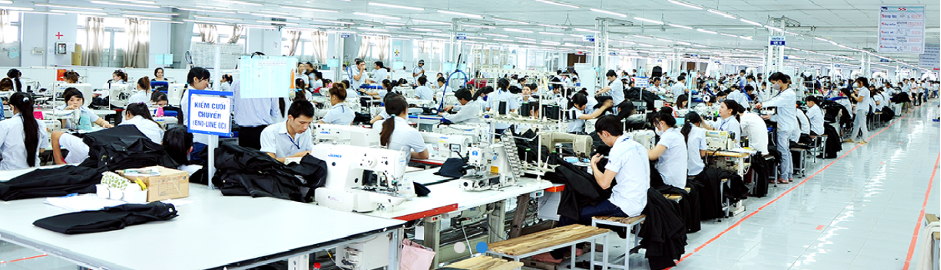 Vinatex, a pioneer in applying automation technology in its factories
Deploying automation systems: Vinatex has invested in deploying automation systems in its factories. This includes using welding robots and automated machinery for fabric cutting, sewing and finishing.
Applying IoT (Internet of Things) technology: Vinatex has integrated IoT technology into the equipment and machinery in its factories to collect data on performance and operating status. This helps it track and manage production processes more effectively.
Developing mobile apps and management software: Vinatex has also invested in developing mobile apps and management software to improve production management, warehouse management and customer interaction.
2. TAL Apparel:
TAL Apparel is one of the world's leading textile and garment groups, and it too has made significant investments in technology and automation. Here are some specific examples:
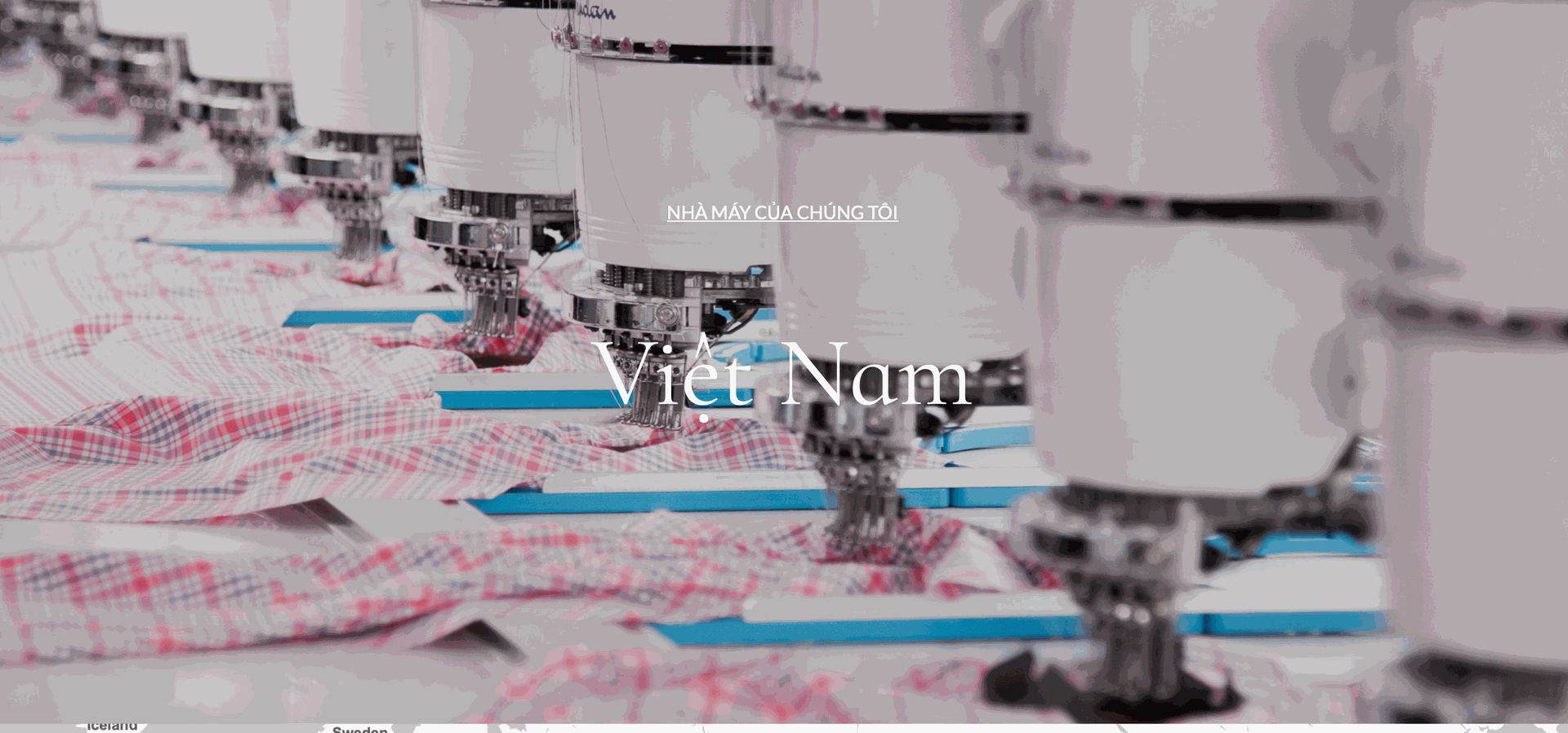 TAL Apparel innovates in technology and digital transformation to boost competitiveness
Building a new factory with modern technology: TAL Apparel has built a new factory in Vietnam with modern automated equipment and machinery to optimize production processes and boost labor productivity.
Using CAD/CAM systems: TAL Apparel has integrated CAD/CAM (Computer-Aided Design/Computer-Aided Manufacturing) systems into its design and production processes. This helps it shorten lead times and optimize the process from design to production.
Strengthening project and process management: TAL Apparel has invested in project and process management software to improve performance and manage work more effectively.
4 outstanding benefits of technology innovation and automation
Technology innovation and automation bring many important benefits and results for textile and garment companies, including:
1. Higher production efficiency:
According to a study by the Vietnam Textile and Apparel Association (VITAS), textile and garment companies that apply technology and automation can increase production efficiency by up to 30-50% compared with those that don't.
Vinatex has automated its fabric cutting process with automated machinery, increasing cutting speed and reducing the time needed compared with manual work.
Khám phá: How is smart manufacturing changing production efficiency and effectiveness?
2. Better product quality:
According to the Ministry of Industry and Trade, textile and garment companies that apply technology and automation typically have product defect rates up to 20-30% lower than those that don't.
TAL Apparel has used CAD/CAM systems to design and produce products with high precision, minimizing errors in the production process.
3. Lower production costs:
A study by the United Nations Industrial Development Organization (UNIDO) shows that textile and garment companies that apply automation can cut production costs by up to 15-20%.
A textile and garment company in Vietnam has used welding robots to replace labor in welding product components, reducing labor costs and increasing efficiency.
4. Greater market competitiveness:
According to the Vietnam Textile and Apparel Association (VITAS), textile and garment companies that apply technology and automation typically have export rates up to 20-30% higher than those that don't.
A textile and garment company deployed a smart production management system that lets it respond to customer orders faster and more flexibly, making it more competitive in the market.
Demo: using barcodes, QR codes, RFID tags and IoT to automate the textile and garment industry
II. Discover how Vinatex succeeded in its digital transformation
In an era full of the challenges and opportunities of the fourth industrial revolution, Vinatex has boldly pioneered the path of digital transformation, taking Vietnam's textile and garment industry to new heights. Let's explore Vinatex's journey and the important steps it has taken to build an outstanding competitive edge in international markets.
1. About Vinatex
The Vietnam National Textile and Garment Group (Vinatex) – formerly the Vietnam Textile and Garment Corporation – was founded on 29 April 1995 from state-owned textile and garment units under central management. Today the group has 118 member units operating in production, business, trade and services, scientific research and training. Although it accounts for only 9% of the workforce, VINATEX accounts for 97% of seed cotton output, over 33% of yarn output, nearly 32% of woven fabric output, nearly 13% of garment output and over 18% of the industry's total export turnover.
Over the years, the Vietnam National Textile and Garment Group has taken many measures to reorganize production at struggling companies to stabilize production and grow. By 31 December 2008, the group had equitized 77 units. Most companies achieved an average return on equity of about 20% after equitization and paid dividends of over 12%. The group's total profit has grown continuously by over 15% a year since 2006.

2. Vinatex's digital transformation strategy: digitalizing while organizing information
Previously, Vinatex had not gone digital; almost all activities were manual and digitalization was practically a “blank slate”. To digitalize, you first have to organize the flow of information. After studying each segment - yarn, weaving, garments… - Vinatex decided to start its digital transformation with yarn, piloting it step by step and learning as it went.
This is the most capable and competitive segment, with a scale equivalent to 1 million spindles, and deep digitalization will open up many opportunities to develop markets and premium customers. The yarn segment has also invested continuously in technology and equipment, so its equipment as a whole is not outdated. Today, Vinatex's yarn segment has built shared data, and the goal for the coming year is for data to be uploaded automatically.
Vinatex divided the work into 2 groups: back office (finance, accounting, HR, office administration, warehouse management, maintenance management, shareholder management, communications) and front office (sales, customers, production management). Vinatex unified one newly built management system and a common operating environment for its controlled units, wholly owned units and branches. At the same time, at least 1 digital product must be adopted each year, following the principle of continuous improvement.
Vinatex also accepted a “good enough” level that is not optimal right away, meaning it accepted changes to its organization and work processes in order to digitalize; it accepted options that were not yet optimal but could be continuously improved and built on to reach a higher level; and for standardized software, it prioritized standard software available on the market.
3. The challenges of digital transformation (DX)
A major challenge was overcoming each company's individualistic mindset, since companies used to see data as their own property. They accepted that the parent company could read their data, but they did not want other companies to know their private information - a mindset that was also a major barrier.
In the past, customers bought if they accepted the price, and companies did not have to provide or explain their processes or disclose their costs. But the market has changed: participants in global supply chains will not accept buying products without a clear cost structure and origin, or without clarity on the product's and the company's social responsibility and environmental protection.
The world wants to know how the company is producing every day and every hour, and customers even want to regulate their orders - for example, if the market prefers blue designs, customers have the right to ask the manufacturer to sew blue first to meet market demand. They even manage which sizes sell and have only those sizes produced to reduce inventory across the whole chain.
Habits of working without integration have long been very entrenched in the textile and garment industry and the group. Companies developed their own applications and mainly internal initiatives, with no fully connected system, as each company wanted its own identity. At first, the workload doubled when DX started, because managers had to do both the manual work and the DX work. That is why digital transformation can discourage workers and fail to reach its goal if the steps and the destination are not clear.
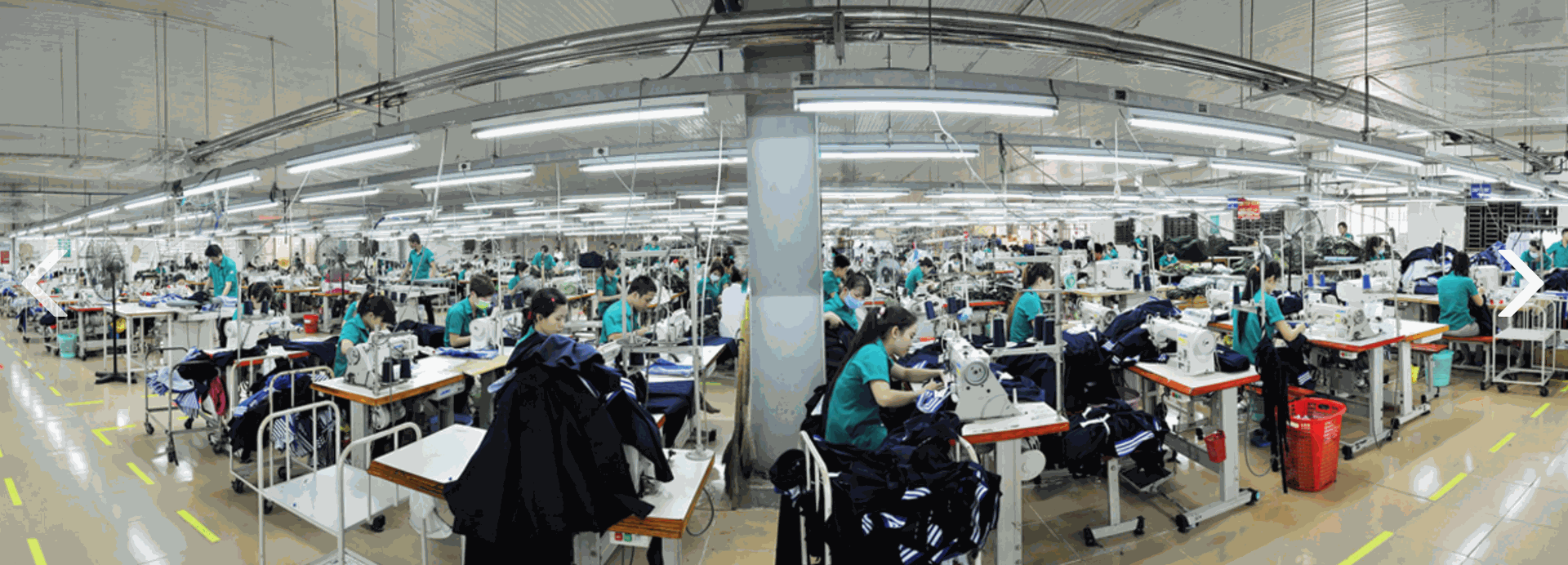
Vinatex factory (source: Vinatex)
4. Vinatex's digital transformation process
Digital transformation roadmap
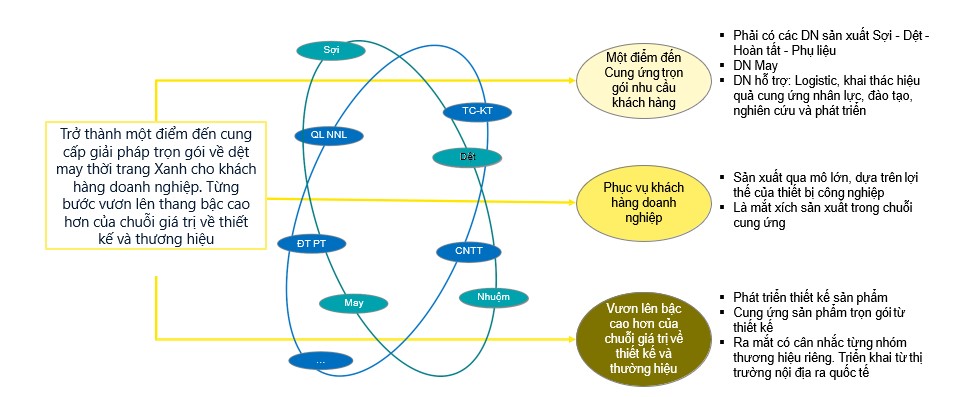
Vinatex's digital transformation process
4 pillars of the digital transformation program
With the overarching strategic goal of becoming a one-stop destination, the Vietnam National Textile and Garment Group (Vinatex) identified 4 key pillars for its digital transformation program to help achieve its strategic goals.
The 4 key pillars are:
- Markets and customers
- Production capacity management and development investment
- Finance and accounting
- Human resource management
Digital transformation implementation principles
Choose the plan in order of priority based on the items that most units care about;
Divide the work into 2 groups:
- Back office: finance, accounting, HR, office administration, warehouse management, maintenance management, shareholder management, communications;
- Guide: Accurate, real-time warehouse management with barcode/QR code technology and a smart warehouse layout
- Front office: sales, customers, production management;
Unify one newly built management system and a common operating environment for controlled units, wholly owned units and branches
At least 1 digital product must be adopted each year. The principle of continuous improvement;
Accept changes to the organization and work processes in order to digitalize;
Build on what exists – improve continuously;
General software, prioritizing standard software on the market, with business processes designed to fit the units' systems.
Digital transformation plan
- Finance, accounting, receivables/payables and inventory software;
- HR management, payroll, recruitment, training and staff evaluation software;
- E-Office administration (correspondence, official documents, meeting rooms, vehicle dispatch, task management, workflows, digital signatures);
- Investment management and project management;
- Continue to expand the functions of the yarn management software and apply it across all units;
- Improve and upgrade phase 1 of the yarn software (better data entry, additional standard data fields for operational management analysis, additional management functions, additional output analysis screens);
- Deploy a smartphone app;
- Build the group's data system
(Source: Vinatex)
5. Some of Vinatex's successes on its digital transformation journey
With new investment projects
Vinatex studied the situation at Phu Bai Spinning JSC and Phong Phu Corporation. Phu Bai Spinning JSC has 1 factory with 30,000 spindles made by Rieter of Switzerland in 2003 and 1 factory with 20,000 spindles made in China in 2007, with good product quality, high efficiency and strong management, making it one of Vietnam's leading companies. It currently employs over 800 workers, an average of 130 workers per 10,000 spindles. The factory is built on a total area of 2.5 hectares.
In 2020, the factory invested in 30,000 spindles, with a norm of 135 workers, or 45 workers per 10,000 spindles - 66% less labor - built on a 9,000 m2 site with 2 floors, using 30% less land. All equipment and products are moved between process steps by overhead conveyors and robots, workers travel by electric vehicles, and everything is digitalized and managed centrally down to each spindle from the control center. It is connected to USTER's global quality testing system and can provide real-time output and quality data to customers in the supply chain, with labor cost savings equal to 120% of the additional depreciation cost.
With in-depth projects, digitalizing so old equipment can run to new standards
Phong Phu Corporation has 4 spinning mills in different locations, all over 10 years old, producing for COATS' global supply chain and making denim and towels with many different types of machines and many design standards across spinning, weaving, dyeing and towel sewing; each machine type also comes in many brands and models, and the supply chain's pressure for daily data on production, quality and inventory is very challenging.
To carry out its digital transformation and digitalize information, the company installed sensors on 100% of its old machines, converted production signals into digital form, developed its own data conversion readers, connected them and wrote apps to manage production data, costs and process settings; it extracts and provides the data required by the supply chain every day. The drawbacks of the system are that data must be provided to the chain manually every day because the apps are self-designed, it does not connect automatically with the new software of modern equipment, and it can't be used for newer machines because manufacturers encrypt their output data.
After more than two years of applying and researching digital transformation, Vinatex found it to be a difficult, complex field that challenges your thinking, how you choose your steps and how you go about it… Digital transformation is not a ready-made set of solutions that businesses just need to apply or follow.
Second, if the wrong choices are made, the costs are very high and the effort can stall midway for lack of financial resources. Failure from lacking the resources to see the process through, and even financial crisis, can absolutely happen during digital transformation. Deciding what level to aim for, at what scale and in which phase is a problem that requires balancing financial and human resources.
Third, digital transformation must be expected to take a long time; at Vinatex this approach will take 10 years to replace old equipment on a rolling basis. The estimate is about 10 years, with equipment needing continuous improvement.
The goal of digital transformation at Vinatex is to secure entry and a solid position in global supply chains and build the capacity for sustainable growth. In the short term, some financial benefits must be sacrificed to focus on investing in digital transformation and training people.
Digital transformation will greatly need macro policies, especially on digital assets, as well as financial support to encourage businesses to go digital, but the core is still the strategy and detailed plan that each business must prepare for itself.
(Source: Industry and Trade Magazine)
III. Conclusion
With the textile and garment industry facing fierce competition and ever higher market demands, technology innovation and automation have become the key to improving competitiveness.
Vinatex, with its ambitious and creative digital transformation journey, has demonstrated the power of applying technology in the industry. From applying IoT and automating production processes to innovating in design and management, Vinatex has made breakthroughs that deliver undeniable competitive strength. Vinatex's journey is proof of the determination and commitment of Vietnam's textile and garment industry to adapt and pioneer in the fourth industrial revolution.