
Smart factory is a fairly familiar term to anyone who has looked into industrial automation. So is smart healthcare closely linked to the Internet of Things? How does the role of this platform differ from that of a smart factory? Let's explore the concept and role of IoT technology in healthcare with Sbiz.vn!
IoMT applications - a breakthrough in smart healthcare
IoT (Internet of Things) was upgraded to IoMT (Internet of Medical Things) in the healthcare industry in early 2016. IoMT grew steadily over time until early 2020, when smart healthcare exploded and became one of the indispensable apps on everyone's phone.

Smart healthcare in the Covid era
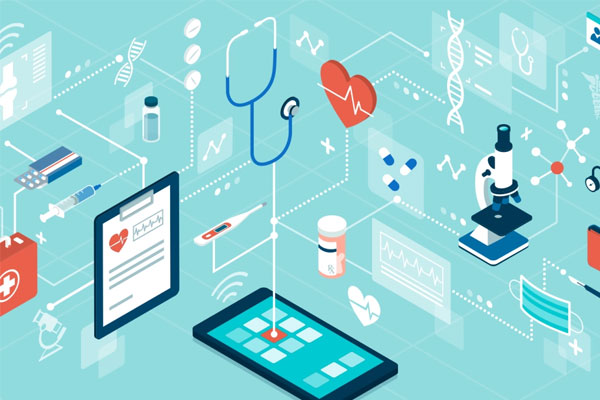
IoMT is a huge network used to store and connect information from medical facilities, patients and doctors. Through it, people can update basic parameters themselves (heart rate, blood pressure, step count) with health care apps and link that data to the healthcare information network.
The powerful onslaught of the Delta variant overloaded many medical centers, leaving them unable to treat patients with other conditions. So IoMT is not only a savior for medical facilities but also an “online” doctor, always supporting patients who need treatment at home.
The role of IoMT in smart healthcare
While the role of a smart factory is to bring profit, reduce wasted time and preserve assets for businesses, smart healthcare brings people many other benefits. Here are some of the standout advantages of smart healthcare:
Simultaneous monitoring and reporting
After each visit, all the data in the patient's medical record is updated. IoMT stores, analyzes and diagnoses, and suggests a suitable follow-up date. For some conditions, such as asthma or heart disease, IoMT software can predict when an episode will occur. This lets patients proactively see a doctor instead of waiting for signs of relapse.

Apps that monitor patients' condition
Thanks to this data, doctors can easily monitor patients remotely, especially while the Covid pandemic is raging and most medical facilities are being used to treat positive cases.
Streamlining processes and saving costs
To cut down on filling in forms, taking a queue number and general check-ups at medical facilities, people can fill in a form in the app and schedule an appointment with a doctor before going to the medical center.

Patients don't have to wait to be examined
Patients just need to do a few simple steps in the app for IoMT to analyze and give the most accurate appointment. This prevents community transmission in hospitals, especially in areas where many people sit waiting to be seen.
Monitoring and alerts
Patients' health monitoring data is updated every day through sensor devices. Smart healthcare then analyzes and diagnoses their condition and sends the data to the doctor. Based on this information, the doctor can bring forward the patient's follow-up appointment.
Remote medical support
IoMT's information network can transmit data very quickly. If a patient has any unusual symptoms or a sudden change in health, the nearest medical center receives an alarm signal. This helps medical centers be more proactive in monitoring patients remotely.
Giving patients peace of mind
Patients can feel completely at ease knowing their doctor is monitoring and caring for them remotely. This is the most outstanding feature of smart healthcare. With just one app, patients can update their condition, and doctors can monitor it and proactively prescribe appropriate treatment.
Supporting research
Smart healthcare not only helps patients and doctors but is also a means for medical researchers to come up with new treatments. A network containing all the necessary data can shorten researchers' search and analysis time.
IoMT supports medical students
Whether medicine advances depends heavily on research. The human immune system changes over time, so no vaccine dose can guarantee 100% protection. Smart healthcare has therefore become a useful tool for the development of medicine today.
IoT and IoMT are the leading trends in bringing technology to medicine. In the midst of the Covid pandemic, smart healthcare supports medical facilities, patients, doctors and even volunteers. The IoMT platform has proven its place in healthcare and will continue to develop in many other areas.