
Just In Time là gì? JIT là gì?
What is JIT? Why does JIT play such an important role in modern manufacturing trends? The JIT strategy can be summed up in one sentence: “Produce the right product - in the right quantity - in the right place - at the right time”, aiming for “zero inventory, zero waiting time, zero extra cost”. To learn more about what JIT is, read the article below.
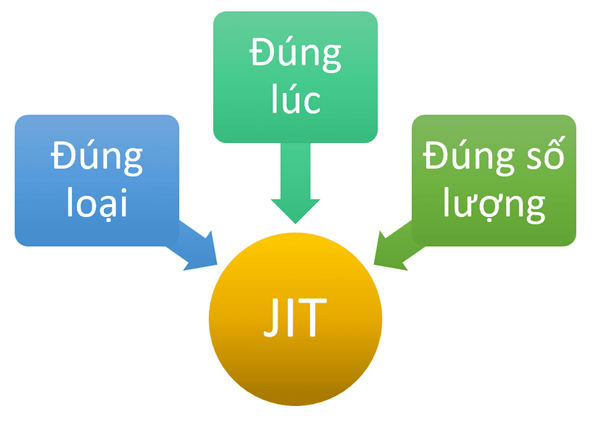
What is JIT? JIT means producing “the right product - in the right quantity - in the right place - at the right time”
Just In Time - JIT là gì?
What is Just In Time? With JIT, processes that don't add value in production or supply must be eliminated. The system therefore produces only the goods and services customers choose. Just In Time is also applied in production and sales processes: the quantity sold and the stock dispatched closely match the quantity produced, limiting tied-up capital and unnecessary inventory.
What is JIT? The Just In Time model is a production management system in which the flows of raw materials, fuel, goods and products in circulation and distribution are planned in detail at every step, so the next production process can start as soon as the current one finishes. This ensures no item in production sits idle waiting to be processed.
Just In Time is an on-demand production model
Conditions for applying Just In Time
● Just In Time systems work well for businesses whose production is regular and repetitive.
● It suits small lots, with roughly equal production volumes, receiving materials throughout production more efficiently than producing large lots that sit in stock and tie up capital.
● The flow of “goods” through production and distribution is planned in detail so the next stage can start right after the previous one finishes. This means no worker or machine has to wait for input.
● Each stage makes only as many products/semi-finished goods as the next stage needs. The worker in the next process is the evaluator of the previous one. They are responsible for inspecting and accepting the work passed to them before starting their own tasks. Products that don't meet requirements are removed from the line and reported to the whole system for timely adjustment.
● The JIT model requires close cooperation between manufacturers and suppliers, increasing the social division of labor through partnerships with affiliated companies.
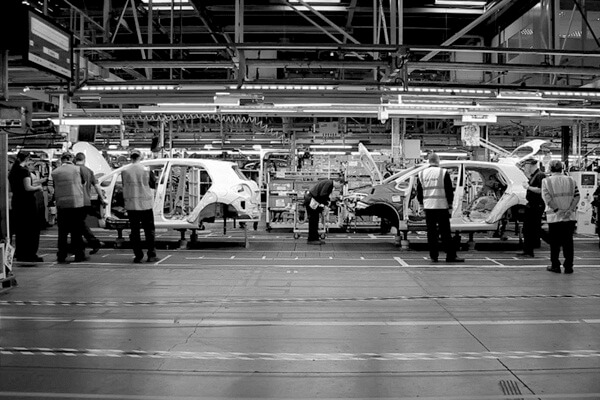
Lean management means maximizing value for customers and minimizing waste for the business
The benefits of applying Just In Time
● Minimizes inventory and tied-up capital.
● Saves warehouse space.
● Significantly improves product quality.
● Minimizes the number of defective products.
● Increases productivity by reducing waiting time for input materials in each production run.
● Flexibility in changing production processes and product designs.
● Workers take part directly in improvement work, raising productivity and product quality.
● Reduces indirect labor.
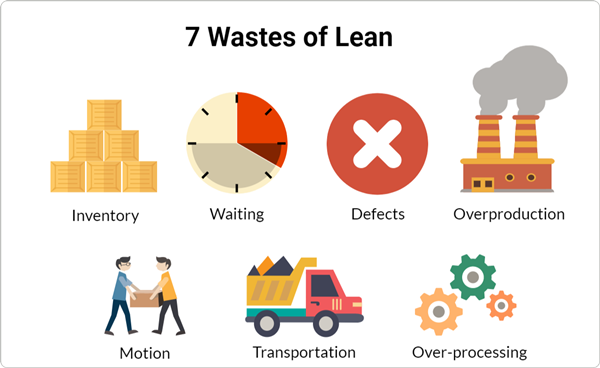
Businesses can limit the 7 risks shown in the image by applying the JIT model
Just In Time in today's economy
Now that you know what JIT is, you should also understand the pros and cons of JIT systems in today's economy.
Common market instabilities
● Economic crises reduce customers' spending power.
● Fierce market competition, with many businesses in the same product segment. Customers abandon old products in search of new experiences.
● The cost of changing over production lines raises product costs and inadvertently slows time to market.
● Globalization leads to changes in the culture, lifestyles, customs and habits… of many peoples.
New thinking to apply Just In Time effectively
The JIT model needs to be applied correctly to deliver its full benefits; here are some points businesses should consider.
Small companies have an advantage over large ones
Large companies have management systems with many levels, so proposing changes takes time or there may be no chance to speak up at all. Small companies, by contrast, are flexible in talking directly with working departments and coming up with the best solution.
Customers have ever more choice
Today the market depends largely on customers' needs and wants. Customers can even intervene directly in product design, so businesses must change to avoid being left behind.
Empowering every member
Splitting off small companies producing individual components becomes more appropriate. Small companies are independent in management and proactive in operations. Orders are fulfilled under contracts on an equal footing, and every member contributes to improvement and raising product quality.
Own only the technological know-how and creative ideas
The advice for every business is to keep only the know-how and creative ideas, while production lines, labor, factories and warehouses can move to areas with cheaper rents to save costs. Always remember: move the factory, not the “proprietary technology”.
➤ Technology solution: SmartBiz purchase management software
Create new demand with products customers have never thought of
To survive the trends of the times, companies need to be dynamic in creating new markets for themselves. A new market isn't simply expanding geographically; it means keeping up with customer needs so you can come up early with new, revolutionary ideas that customers have never seen or thought of. Expand into future markets rather than making only small improvements.
➤ See more details: What is a customer journey? How does it affect purchasing decisions?
Comprehensive social responsibility
The essence of Just In Time is customer focus, putting customers at the center of development. However, employees are the first customers a company must satisfy, followed by customers in the wider community. A business's success cannot be separated from the safety, stability and development of the community.
Above is the most complete and detailed information on what JIT is and the issues surrounding production concepts in today's new era. We hope this article has given you useful information.