Did you know that digital technology is helping manufacturers cut waste by up to 50% and dramatically increase efficiency? Lean Manufacturing 4.0 is not just a trend but the key to optimizing production, cutting costs and raising productivity.
- How can digital technology completely change the way businesses make production lean?
- Which kinds of waste are being eliminated thanks to IoT, AI, MES and automation.
- How can businesses measure Lean results with digital data?
Let's discover the secrets to turning your factory into a smarter, more efficient system than ever!
Lean Manufacturing là gì?
What is traditional Lean Manufacturing?
Lean Manufacturing is a management philosophy focused on minimizing waste in production while optimizing processes to improve efficiency and product quality. The method originated from the Toyota Production System (TPS) and has been widely applied in many industries around the world.
What is Lean Manufacturing with digital technology?
Lean Manufacturing combined with digital technology (Digital Lean Manufacturing) upgrades the traditional Lean method by leveraging real-time data, automation and AI to optimize processes. Digital technology helps businesses detect and eliminate waste faster and more accurately, while optimizing resources and increasing efficiency.
Lean Manufacturing vs. Lean Manufacturing with digital technology
|
Criterion |
Traditional Lean Manufacturing |
Lean Manufacturing with digital technology |
|
How waste is detected |
Based on experience and manual observation |
IoT sensors, AI, real-time data analysis |
|
Performance measurement |
Manual, delayed reports, prone to errors |
Automatic measurement via MES, ERP, digital dashboards |
|
Giám sát quy trình |
Workers and managers monitor directly |
AI and IoT systems monitor 24/7 with instant alerts |
|
Production optimization |
Improvements based on real-world trials |
AI analyzes data and suggests improvements based on predictive models |
|
Inventory management |
Manual counts, prone to errors |
RFID, QR codes and ERP enable real-time management |
|
Machine maintenance process |
Fixed-schedule maintenance (preventive maintenance) |
AI-based predictive maintenance |
|
Response time to incidents |
Slow, handled based on experience |
Instant alerts through the digital monitoring system |
|
Decision-making |
Based on paper reports, slow |
Fast decisions based on real-time digital data |
|
Level of automation |
Low, many manual steps |
High, many processes automated |
|
Speed of improvement |
Depends on people, time-consuming |
Continuous, with AI and data suggesting improvements |
Examples:
- Automotive: Toyota uses IoT to monitor machines and AI to analyze data, raising OEE from 70% to 85%.
- Electronics: Samsung deployed an MES to track production performance in real time, cutting the product defect rate from 5% to 1.5%.
- Food: Nestlé uses IoT sensors to track energy consumption, cutting annual electricity costs by 15%.
The 7 types of waste in Lean manufacturing – the "hidden enemies" of efficiency
Did you know that more than 60% of activities in a factory may be waste that the business doesn't even notice? Lean Manufacturing has identified 7 types of waste (Muda) that erode productivity and multiply production costs.
- Overproduction – making products before there is demand, creating large inventories and tying up capital.
- Waiting – machines stand idle and staff wait for materials, delaying the production line.
- Unnecessary transport – moving materials and products between operations without adding value.
- Over-processing – doing more than necessary, or using overly complex technology for a simple job.
- Excess inventory – excessive stocks of goods and materials increase storage costs and waste space.
- Inefficient motion – staff have to move around a lot to fetch tools and materials, wasting time and reducing productivity.
- Defects – substandard products have to be repaired or reworked, wasting labor and materials.
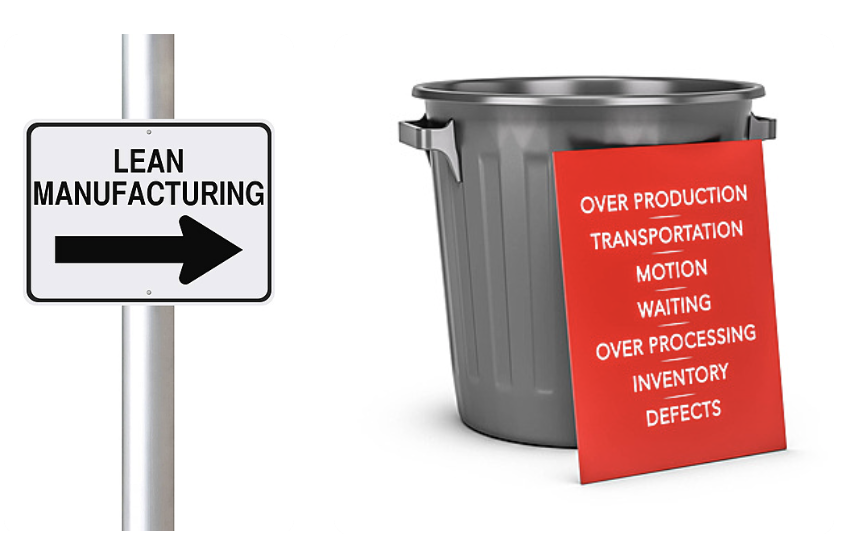
The 7 types of waste – the hidden enemies of production efficiency
The question is: is your business suffering from at least one of these types of waste? If so, how do you identify and eliminate them? Eliminating this waste helps businesses improve production speed, cut costs and raise product quality.
5 ways to identify and eliminate waste with digital technology – the "all-seeing eye" of the smart factory
In traditional production, identifying waste depends heavily on the experience of managers and workers. In a smart factory, however, digital technology has become an “all-seeing eye” that measures, analyzes and eliminates waste accurately, quickly and automatically.
How do you detect waste?
Waste in production takes many forms, including: waiting time, surplus materials, unnecessary motions, defective products, unnecessary energy consumption, etc.. Digital technology helps detect and deal with this waste in the following ways:
#1. IoT sensors – detecting waiting time and low machine performance
How it works:
- Attach IoT sensors to machines to measure operating time, waiting time and machine performance in real time.
- Feed this data into the analytics system to compare actual performance with optimal performance.
- Send alerts when abnormal idle time is detected, so technicians can intervene in time.
Electronic components plant: A PCB (printed circuit board) assembly company uses IoT sensors to monitor its SMT (surface-mount technology) machines. The system found that the machines had an average of 20% waiting time per shift due to a lack of input materials. Based on this data, they adjusted the material supply plan, cutting downtime to 5% and increasing efficiency by 15%.
#2. MES – tracking productivity at each production step
How it works:
- The MES collects production data from machines and operations to show the productivity of each operation and each shift.
- When productivity drops or there are signs of a bottleneck at an operation, the system automatically reports it so managers can intervene.
- MES also supports analyzing the causes of waste, for example people, machines or material shortages.
Xem ngay Demo: Are smart manufacturing and automation as hard as you think?
Automotive plant: A carmaker found that its seat assembly line was 12% less efficient than the standard. The MES showed that the problem lay in the quality inspection step, where staff spent too much time on unnecessary steps. After optimizing the process, assembly speed rose by 8% and time wasted on manual inspection fell.
#3️. AI & machine learning – predicting faults and optimizing production processes
How it works:
- AI collects data from sensors, machines and MES to detect abnormal trends and predict machine failures before they happen.
- Machine learning analyzes millions of production data points to suggest how to optimize the production flow, cutting unnecessary steps and increasing efficiency.
- AI can optimize machine maintenance schedules based on actual performance, avoiding maintenance that is too early or too late.
Cement plant: A plant uses AI to analyze the energy consumption of its clinker kilns. AI found that some kilns consumed more fuel than normal because deposits on the kiln walls were causing heat loss. The system automatically triggers maintenance alerts at the right time, saving 5% in fuel costs every year.
#4️. QR/RFID codes – managing materials, reducing losses and excess inventory
How it works:
- Attach QR/RFID codes to each lot, raw material and semi-finished product to track location, quantity and stock status.
- The system scans codes automatically as goods move between operations, enabling accurate real-time inventory management.
- Integrating RFID with ERP enables automatic ordering when materials hit the minimum level, avoiding shortages or surpluses.
Khám phá ngay: Which technology for smart warehouse management: barcodes/QR codes or RFID?
Pharmaceutical plant: A pharmaceutical company applied RFID to track drug manufacturing materials. Previously, many materials expired because they were not rotated in time. After adopting RFID, they control material shelf life by FIFO (first in – first out), cutting expired materials by 30% and saving billions of VND every year.
#5️. Digital dashboards – real-time performance monitoring
How it works:
- Create visual dashboards showing productivity, downtime and production defects in real time.
- Connect to IoT, MES and ERP systems to provide accurate data and support fast decision-making.
- Use AI to suggest corrective actions when performance drops or anomalies appear.
Food plant: A beverage company set up a digital dashboard to track bottling speed and defect rates on each line. When it detected a sudden spike in defects on one line, the system alerted technicians to check immediately, cutting scrap by 25%.
4 KPIs for measuring Lean effectiveness with digital data
With the development of digital technology, Lean Manufacturing no longer relies only on observation and experience, but can be measured and optimized using real-time data. Lean Manufacturing focuses on eliminating waste, optimizing processes and improving efficiency. Combined with digital technology, businesses can measure Lean effectiveness accurately with KPIs based on real-time data. Here are the key groups of metrics:
Learn more: The secret of success: how did Toyota make its production lean?
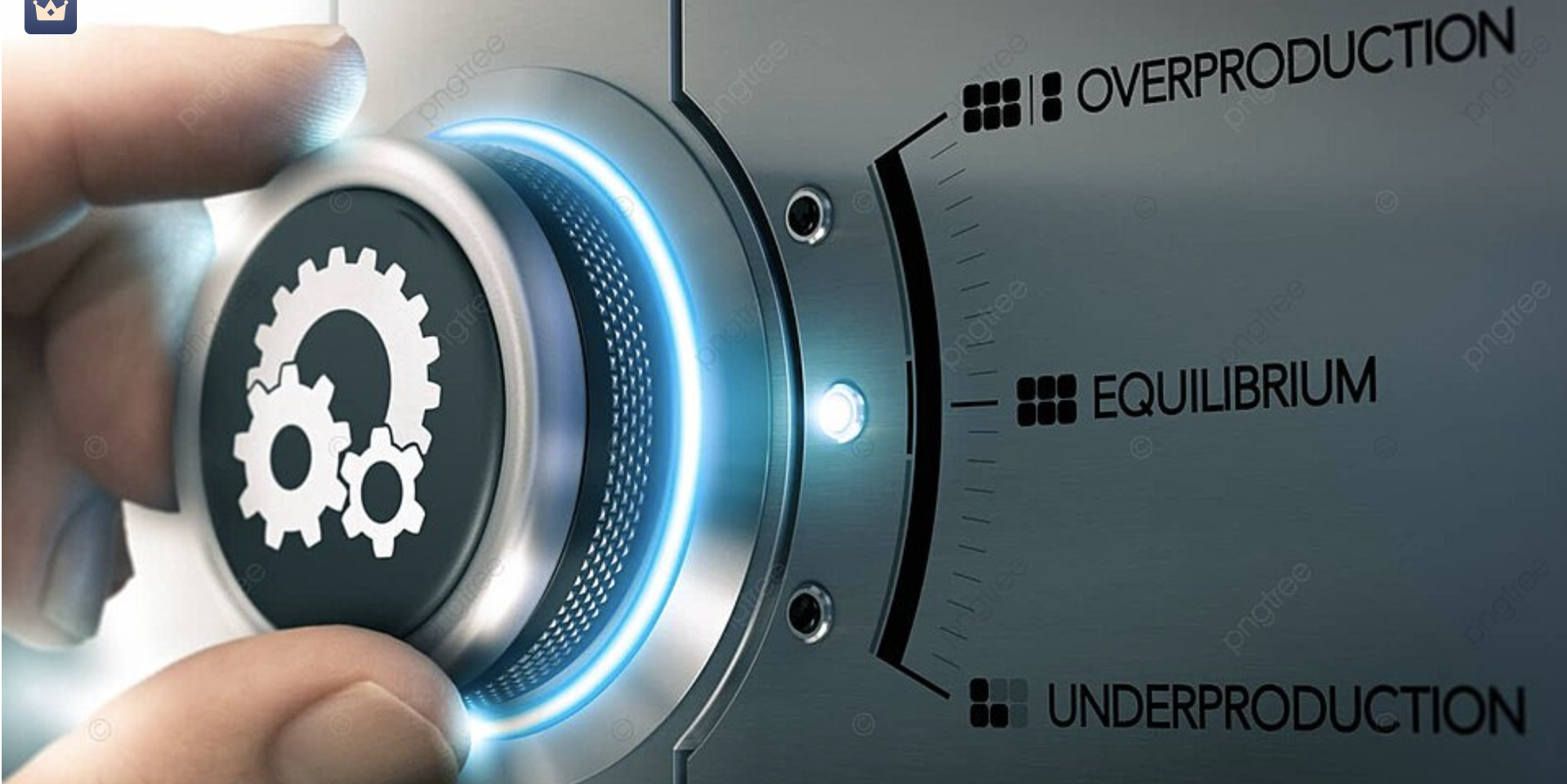
Using digital technology to identify and eliminate waste and measure Lean effectiveness
#1️. Production efficiency KPIs
1.1. OEE (Overall Equipment Effectiveness)
- Formula: OEE=Availability×Performance×QualityOEE
- Availability: machine running time / planned time
- Performance: actual output / potential output
- Quality: number of good products / total products made
Applying digital technology:
- IoT sensors track machine downtime to determine availability.
- MES and AI analyze data to improve performance.
- Automated inspection systems assess quality in real time.
Target: standard OEE ≥ 85%; anything lower needs improvement.
1.2. TEEP (Total Effective Equipment Performance)
Formula: TEEP=OEE×(production time/24/7 time)
- Meaning: assesses how well equipment is used compared with the maximum available time.
Cycle time (production cycle time)
- Formula: CycleTime=time to produce one product
Applying digital technology:
- MES and IoT sensors monitor the time taken by each operation.
- AI predicts bottlenecks and reduces waiting time.
Target: reduce cycle time to increase output without lowering quality.
#2️. Waste reduction KPIs
2.1. First pass yield (FPY) – the share of products right the first time
- Formula: FPY=products meeting the standard the first time / total products made
Applying digital technology:
- Automated quality inspection systems detect defects early.
- Machine learning analyzes the causes of defects and suggests adjustments.
Target: FPY ≥ 98% to reduce rework and material waste.
2.2. Scrap rate – the share of defective products
- Formula: Scrap rate=defective products / total output ×100%
Applying digital technology:
- AI & machine learning analyze the causes of defects at each operation.
- MES and IoT monitor defects in real time.
Target: keep the scrap rate < 2% to reduce scrap costs.
2.3. Downtime
- Formula: Downtime=unplanned machine stoppage time
Applying digital technology:
- IoT sensors and SCADA systems track machine status.
- AI predicts equipment failures and optimizes maintenance schedules.
Target: reduce downtime to below 5% of total operating time
#3️. Inventory & materials management KPIs
3.1. Inventory turnover
- Formula: Inventory turnover=cost of goods sold / average inventory value
Applying digital technology:
- QR/RFID codes track stock levels accurately in real time.
- AI optimizes the supply plan, avoiding excess inventory.
Target: inventory turnover ≥ 6 times/year.
3.2. Lead time (from order to delivery)
- Formula: Lead time=time from receiving an order until delivery
Applying digital technology:
- The ERP system optimizes the supply flow.
- MES combined with RFID tracks production and delivery status.
Target: cut lead time to ≤ 30% below the industry standard.
#4️. Safety & environment KPIs
4.1. Accident rate (occupational accident rate)
- Formula: Accident rate=number of accidents / total working hours × 1000
Applying digital technology:
- AI cameras monitor compliance with occupational safety.
- Wearable IoT devices warn of risks to workers' health.
Target: reduce the accident rate to ≤ 1 per 1,000 working hours.
4.2. Energy efficiency
- Formula: EnergyEfficiency=total production output / total energy consumed
Applying digital technology:
- IoT monitors electricity, steam and compressed air consumption in real time.
- AI optimizes machine operating modes to reduce waste.
Target: increase efficiency by ≥ 15% compared with before Lean Digital.
Conclusion
Lean Manufacturing 4.0 is not just an improvement in manufacturing but a revolution based on digital technology. By applying IoT, AI, MES, automation and smart data systems, businesses can eliminate waste, optimize processes and raise productivity sustainably.
Combining lean thinking with the power of technology helps manufacturers not only cut costs and improve operational efficiency but also adapt quickly to the market and maintain a competitive edge.
Are you ready to upgrade your production model to Lean Manufacturing 4.0?
Start today so you don't fall behind in the race to digitalize manufacturing!