Accurate inventory data is crucial to a business's success because inventory information affects everything from serving customers to finance. When inventory counts are wrong, service, efficiency and profit all suffer. It prevents companies from forecasting accurately, and they may order too much inventory or find they don't have enough on hand to keep their commitments to customers.
Contents
1. What is a periodic physical inventory count?
2. What is cycle counting?
3. The difference between cycle counting and periodic counting
4. Choosing the best way to count inventory
5. Why is cycle counting effective?
6. The inventory cycle counting process
7. Inventory cycle counting methods
8. Benefits of cycle counting
9. A practical guide to inventory cycle counting
10. Automation in cycle counting
11. Frequently asked questions about inventory counting FAQs
What is a periodic physical inventory count?
Traditionally, companies have valued the annual physical count as a way to start a new fiscal year knowing their inventory and to adjust their books so they can make business decisions based on accurate information. Companies with less inventory often find the effort involved in an annual physical count manageable and see no compelling reason to change.
What is cycle counting?
Cycle counting is a checks-and-balances method in which companies confirm that their physical inventory quantities match their inventory records. It involves counting specific products frequently and recording adjustments. Over time, all of their goods get counted.
Warehouse managers and supply chain professionals usually prepare plans for staff to check inventory. The most effective inventory management plans lead to minimal transaction error rates and extremely high inventory accuracy without taking staff away from essential tasks.
Cycle counting is an inventory management option that lets you count the items in a designated area of the warehouse without stopping operations to carry out a complete physical count.
The difference between cycle counting and periodic counting
Although both periodic physical counts and cycle counts aim for the same goal - accurate inventory data - they take different approaches to reach it. Those differences have important implications for daily warehouse operations. The following table gives a quick comparison of the two methods:
So sánh |
| |
| Cycle counting (frequent counts) | Periodic counting |
Schedule | Ongoing (usually daily, weekly or monthly) | Occasional (usually annually) |
Items counted | Selected SKUs within a given period | All SKUs or items at once |
Level of disruption | Low | Cao |
Information provided | Quantities of selected items on a regular basis
| Exact quantity of every SKU in stock. |
Staff | Can be the responsibility of a designated team, combined with other staff
| May involve many employees and some temporary workers |
Level of flexibility | Considerable (e.g. by value, quantity, category, seasonality or other characteristics)
| Minimal |
Types of companies | Usually those with large, growing or complex inventories where physical counts are difficult
| Usually those with limited inventory, where a physical count is less disruptive. Public companies and some auditors or accountants may require it for financial reporting.
|
Choosing the best way to count your inventory?
As warehouses and other facilities grow larger and more complex, annual physical inventory counts become more difficult, time-consuming and costly, while the relative business value of cycle counting increases.
Some companies rely on a combination of cycle counting and periodic/physical counts.
Some retailers cycle count inventory all year round, focusing especially on high-demand items. They then do a full count after the holiday/season ends.
Other companies may do one final physical count to establish a solid baseline for the transition to cycle/frequent counting.
Why is cycle counting effective?
Inventory cycle counting
The inventory counting process
Companies start cycle counting inventory to eliminate the root causes of errors. This leads to reliable control processes. After completing a full physical count (periodic physical inventory) to correct any discrepancies in the warehouse, the company sets up a cycle counting program for ongoing maintenance.
The 7 steps of the cycle counting process are:
Review records and documents
You want to start with an accurate database. Begin the process by reviewing and correcting data entry errors across all inventory count transactions.
Print or upload the count report
Create a count report. If you are using a mobile device for counting, upload the report to that device.
Start counting
Compare the inventory locations, descriptions and quantities in the report with what is actually in the aisles, racks and shelves.
Investigate and reconcile
Identify any discrepancies found during the count and reconcile them with the warehouse manager. Look for patterns of errors.
Replacement procedures
Implement any inventory counting policies or procedures, if needed.
Adjust records
Make changes in the inventory database to reflect what is actually on the racks and shelves.
Calculate and repeat
Check inventory regularly and calculate the inventory accuracy percentage.
Cycle counting methods
The main cycle counting methods are based on physical area or sales ranking. For physical area counts, consider high-volume items more often. When using sales ranking methods based on the Pareto principle, count faster-selling, more expensive items more often.
 Inventory counting methods
The Pareto principle method, also known as ABC cycle counting, assumes that 20% of the goods in the warehouse account for 80% of sales. These are the “A” items (“B items” make up 30% of inventory and 15% of revenue, and so on). “A” items may be your best-selling SKUs or your most valuable assets. Inventory control software can determine which items count as A, B or C. You may want to count your “A” items more often and your “B” and “C” items less often.
You can calculate ABC cycles based on other metrics such as transactions and production quantities. There are many metrics you can use to identify which items have a significant impact on your organization's total inventory cost.
However, most software systems rely wholly or partly on ABC cycle counting, regardless of the metrics used to define A, B and C. Cycle counting methods include:
Cycle counting methods | ||
| Description | When to apply |
ABC (Pareto) analysis | Count "A" items most often, followed by "B" items, and count "C" items least often. Assume the number of counts will decrease over time as inventory records become more accurate. You will still maintain the ratio of counts between A, B and C items. | Start with the ABC method when you need a customizable program that pays more attention to essential products. |
Usage-based counting
| Count the most frequently used items most often, and other items less often.
| Use this method when you have full control over high-value items and need more. |
Control group
| Perform this count several times over a short period. | Use a control group when you want to find process errors. |
Opportunity-based | Use it to count items at key points in the inventory management process, such as after every 10 transactions of a particular item. | Use this method as another time-saving way to check the accuracy of your processes. |
Random sampling | Use it to count items at key points in the inventory management process, such as after every 10 transactions of a particular item.
| Use this method when you stock many similar items. |
Targeted counting by floor area | How often you count depends on the company's goals, but you should count each area at least once a year.
| To ensure storage locations are accurate. It can also help you find any patterns of inventory discrepancies based on the warehouse layout. |
Hybrid | Counting frequency depends on the method you set up. | Your company needs a more flexible counting method.
|
Read now: How to manage inventory with the 80/20 rule (the Pareto principle)
Benefits of cycle counting
No matter how good its replenishment, tracking and management systems are, an organization must regularly check the physical stock levels of important items. Maintaining accurate item counts can help reduce the safety stock needed and lower overall costs.
Because it doesn't force companies to stop operations and count their entire physical inventory at once, cycle counting has become a popular inventory management strategy for companies in every industry. Other benefits include:
· Higher order fulfilment rates
· Better customer service levels
· More accurate inventory valuation
· Higher sales
· More time between physical counts
· Fewer errors
· Fewer inventory write-offs and less obsolete stock
· A more efficient operation overall
· The annual count can be eliminated
· Improved closing process
· Lower audit fees
· No staff overtime costs
· Timely theft detection
A practical guide to inventory cycle counting
Whatever your inventory audit method, it must be systematic and part of regular business operations. Each organization should also decide its counting interval based on the specifics of its inventory.
The 12 best counting practices include:
#1: Close all transactions for the items in the warehouse before counting.
#2: If you use the ABC method, classify items into the corresponding count groups using documented, designated procedures.
Number of SKUs:
Determine the number of products or stock keeping units you want to count at one time. Based on what you choose to count out of the total SKUs, decide how many high-value products to count in the period.
#3: Count all products for all the listed SKUs.
Count frequency:
How often you count inventory depends on how many SKUs you want to cycle count during the year. For example, if you want to count 1,000 products (SKUs) a year, count ~83 SKUs a month, ~21 SKUs a week and ~3 SKUs a day, assuming you count each SKU only once a year. You may want to count high-value items more often. Either way, you must set a daily time when counters will record their SKUs.
Learn more: What is a SKU? Why SKUs support warehouse management
#4: Decide what to count when. It makes sense to count high-value items or items that move quickly through the warehouse every week, and to count all other inventory every quarter. Conway suggests listing items by warehouse location to decide how many you will count each quarter.
An inventory counting policy specifies when periodic counts are carried out to confirm inventory balances. Companies should also decide whether they will count products randomly or according to a set pattern, and whether they will carry out occasional “special” checks.
#5: Use the inventory accuracy formula to see changes over time.
#6: Identify the fastest-moving items in the warehouse. Rank them from fastest to slowest to work out how to classify items for future counts.
#7: Dedicate specific staff to counting teams.
This resource depends on the number of staff available and the amount of time they can spend counting inventory. For example, some companies ask staff to use the time before the end of their shift to count SKUs in their designated areas. This makes use of the natural lull in staff productivity
#8: Make sure teams count every product at least once a quarter.
#9: Count empty locations. “If a pick order leads to an empty bin or rack, warehouse staff issue an instruction asking them to count the bin and confirm whether the bin at that location is empty.” Conway explains that this quickly verifies that the bin is empty and helps confirm that the count at the item's warehouse location level is accurate.
#10: At first, you may want to count twice to make sure the figures are accurate. A supervisor can check the inventory quantities in the system.
#11: Investigate when errors increase.
#12: Document everything: the process, the changes and the results.
Automating inventory cycle counting
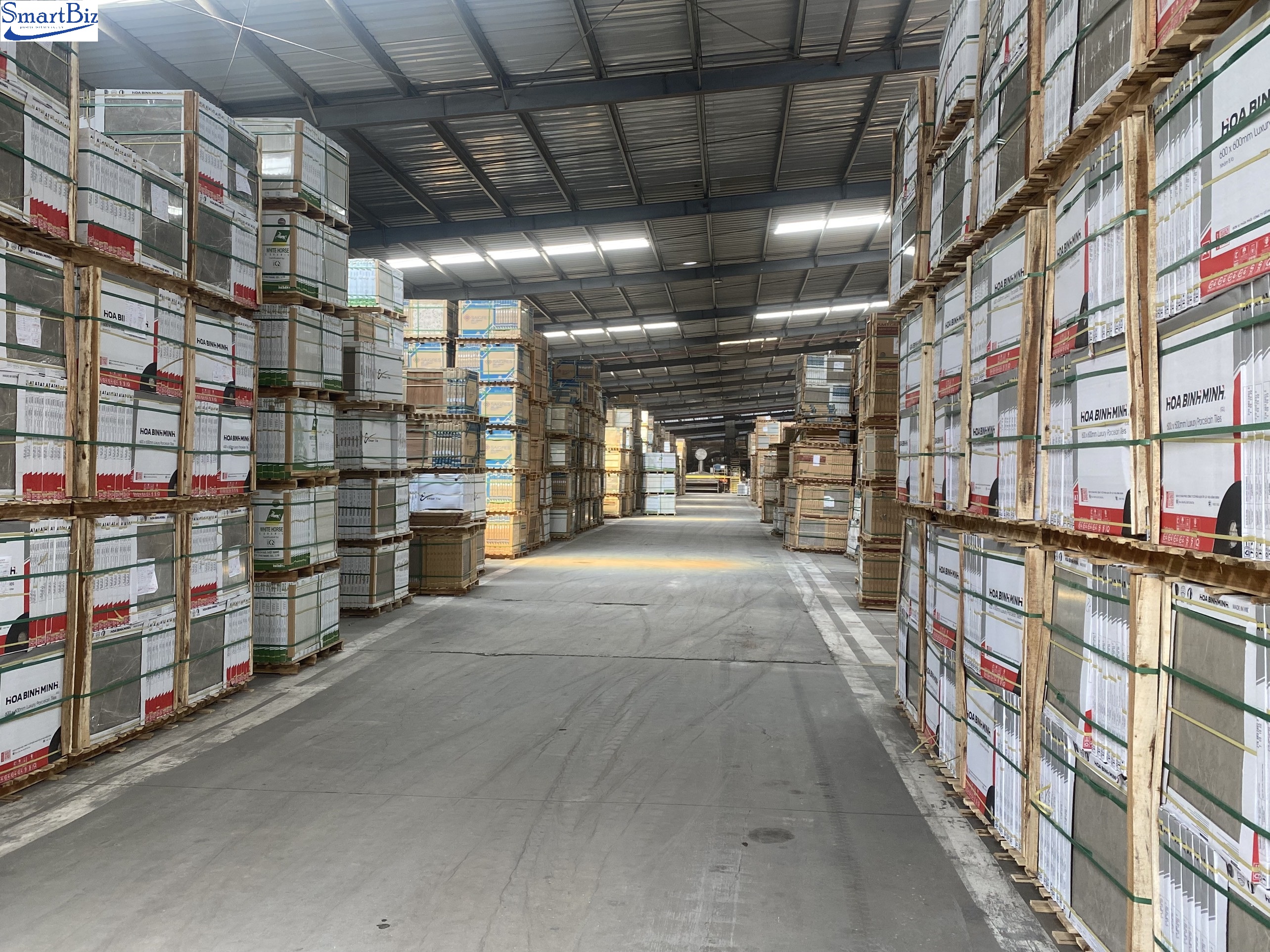
Thanks to technology, the cycle counting process has become easier, less intrusive and even less labor-intensive. By replacing Excel spreadsheets or other manual inventory control systems with inventory control software, companies can track their inventory more effectively - while minimizing human error and saving time, money and valuable labor hours.
Smart warehouse management solutions make it easy to highlight discrepancies, turning what could be a long, arduous process into a simple one that takes relatively little effort.
Devices include mobile computers, robotic counters and barcode scanners.
If you are still relying entirely on annual physical inventory counts, that warrants serious consideration.
Frequently asked questions (FAQs)
Cycle counting is usually done monthly or quarterly, although some businesses may do small counts weekly or even daily. It usually depends on the type of goods you sell and the working environment. But cycle counts will usually be much more frequent than full periodic physical inventory counts, which may only happen once or twice a year.
Cycle counting (or frequent counting) is usually a daily process, although each day's count covers only a small part of the total inventory. Depending on the cycle counting method used, a company may count some types of inventory more often than others. For example, many companies prioritize counting their most valuable or most used items and count those more often.
With a smart warehouse management system, you can make cycle counting part of your staff's daily routine. It can remind staff in the warehouse or store to do a count and tell them which items to count that day. They can scan each item while checking the shelves or enter the quantity on hand, and the system can then compare it with the figures in the inventory management system.
Retail cycle counts follow the same principles as counts in other industries, but they can take place in stores instead of only in warehouses. Comparing expected stock levels with what is actually available can be especially important in stores because they are frequent targets of theft. It is important to train associates on how to perform counts and on the signs of problems.