Optimizing production management is important for manufacturers. How a company manages its production operations can determine the success or failure of the business.
Main contents
What is production management?
Production management is the process of managing the conversion of production inputs (materials, labor and capital) into production outputs (the goods a company produces). It is an integral part of overall business management and includes overseeing both the planning and the execution of the production process. Production management therefore involves managing materials and inventory, as well as adhering to design specifications, equipment use, performance and labor to carry out the company's production strategy.
The role of production management is to harmoniously handle all the main aspects of production, also known as the 5 Ms of production:
Types of production you need to know
There are three types of production processes: Make to Stock (MTS), Make to Order (MTO) and Make to Assemble (MTA). These three types of production work as follows:
Production models and real-world examples
Repetitive manufacturing
This is a 24/7 production/assembly line, run with production process automation such as conveyors and robots.
Repetitive manufacturing
This is a 24/7 production/assembly line, run with production process automation such as conveyors and robots.
Discrete manufacturing
This also relies on a production line. However, the products made by the manufacturer are very diverse, requiring the line to be set up and changed over depending on the product being made.
Job shop manufacturing
Uses separate workshops and production areas to create custom-made products.
For example, A Bakery makes cookies every day for customers who want them. To make a different product, such as muffins ordered by a customer, the same production line is used after reconfiguring the machines.
Similarly, a tailor makes clothes based on customer requirements and the total quantity of customer orders. Sewing and design are specific to each customer based on individual measurements. Clothes are made to meet the quantity ordered by each customer, so they are not mass-produced.
Mass production
For example, the parts of a particular car model are mass-produced.
Another example is Coca-Cola, a bottling company that operates on mass production within a continuous production system. Its products are highly automated and standardized and produced in large quantities.
Coca-Cola's production process involves moving sub-parts or sub-assemblies from one production stage to another through a continuous process or flow. The product is added to at each stage of mass production. Coca-Cola uses this mass production method because of the variety of the company's products, which are distributed in large-volume orders. The company has many different products in its distribution range, such as Diet Coke, Coke, flavored soft drinks, bottled water, etc. So producing such a range of products can be done most efficiently through mass and continuous production.
Continuous (process/flow) production
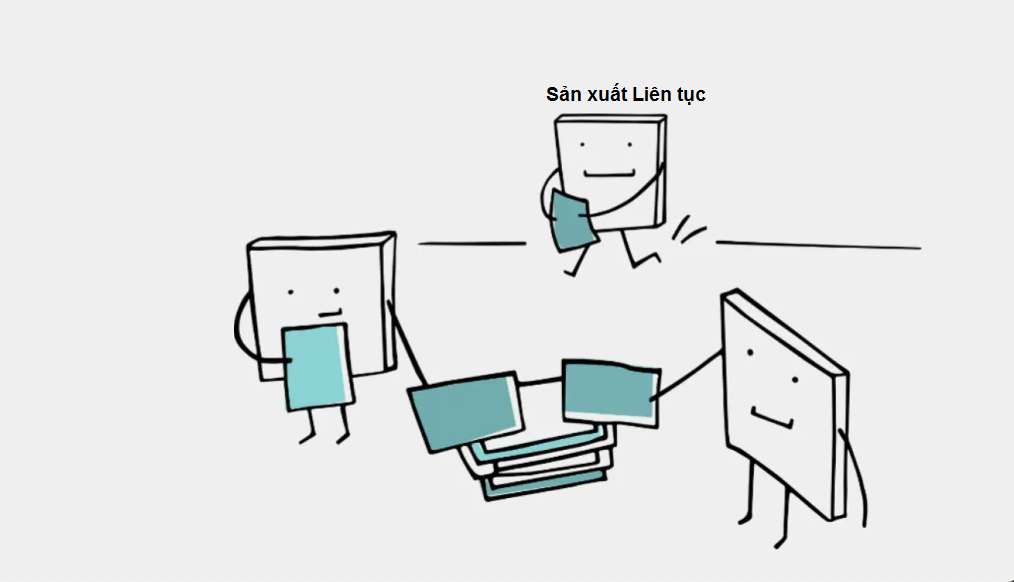
Continuous production exists in this system because of the uniformity and standardization of the sequence of operations. In addition, the machinery used in production is automated and highly sophisticated. The process is used when processing certain materials in large quantities.
Typically, the process in this system involves taking the output (finished goods or services) of one process as the input (materials) of the next until the end of production or manufacturing. In addition, in most industries a single main raw material is used in the transformation process to create different products at different levels of production or operation.
For example, papermaking is considered a complex process involving various processes and machines to turn logs into finished products, i.e. paper. The industry uses a continuous production system so it can produce large quantities of standardized products. The continuous production management process in papermaking involves various steps. It starts with feeding logs into a machine to remove the bark, then grinding them into wood chips. A special solution can cook the wood chips, and this solution is placed in a large vessel called a digester. The digester is designed to handle large volumes and run continuously. Through this operation, the wood chips are efficiently turned into pulp. The next step involves pumping the pulp into automated machines and moving it over rollers to press and dry it.
The product management process and tips for effective management
The product management cycle can vary depending on the project you are working on. In general, it can be divided into the following steps: idea sourcing, idea screening, market and user research, strategy development, product creation, testing & feedback collection, and product improvement.
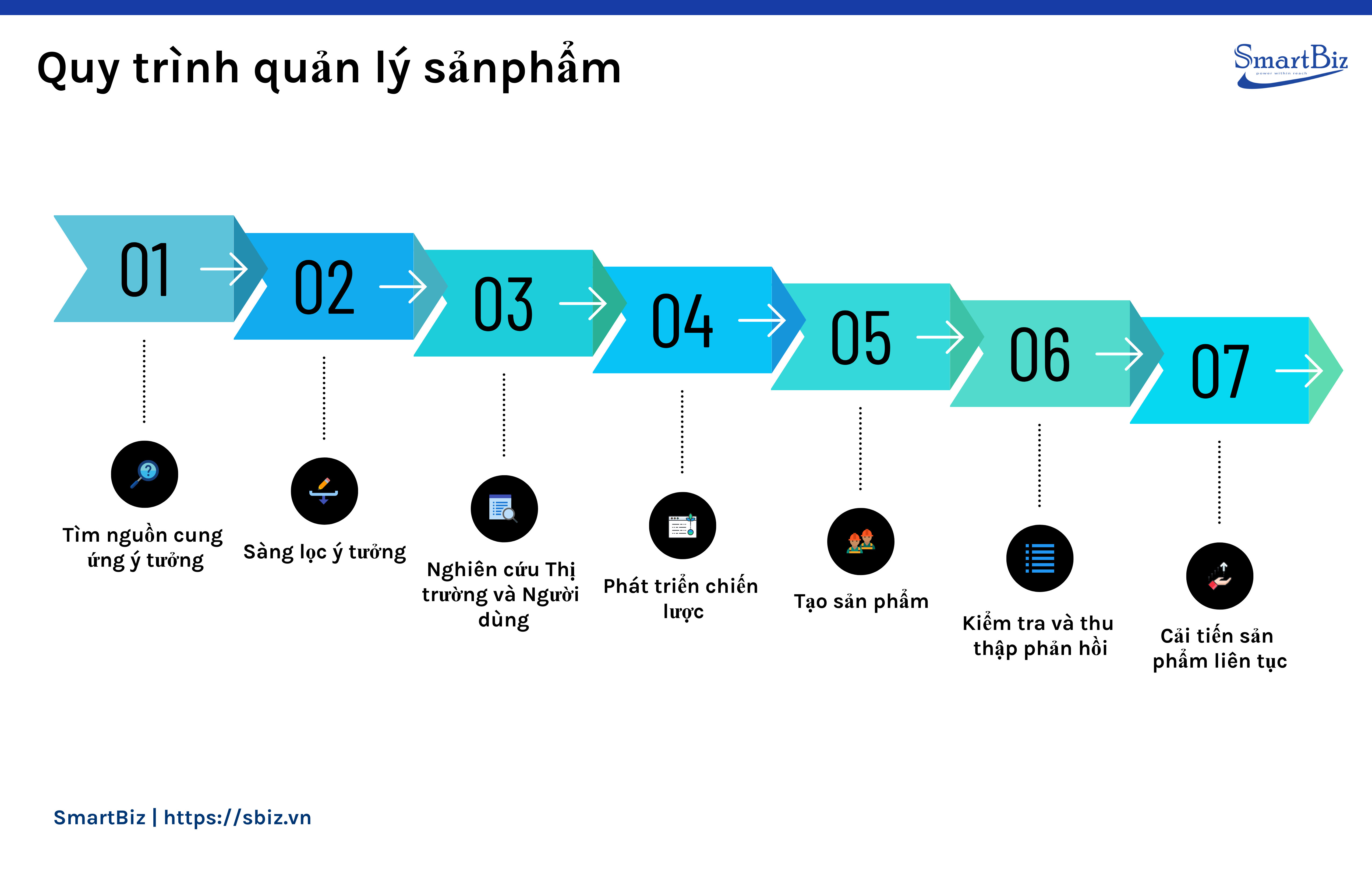
The product management cycle can vary depending on the project you are working on. In general, it can be divided into the following steps: idea sourcing, idea screening, market and user research, strategy development, product creation, testing & feedback collection, and product improvement.
The product management process
Step 1 - Idea sourcing
We know how tempting it can be to start writing as soon as you come up with a great idea. The tricky part is that the idea may already have been done. As a startup owner, you should invest time in ideation first. It will help you filter out all the basic ideas and come up with the most non-trivial solutions. Here are 2 ways you can do it effectively:
Research. Look for trends, growing industries and highly funded products - gathering all this information takes time but is well worth it. It gives you a fuller picture of the market and saves time later.
Brainstorming. This is a process of generating all the ideas you can think of. To organize it properly, you need to create an open atmosphere, rule out criticism and, last but not least, assemble a diverse team. Combining people from different areas of expertise and backgrounds is the best idea because it fosters innovation. A diverse team is called cross-functional.
Step 2 - Idea screening
With a list of ideas in hand, it's time to define the specifications. First, choose the top 3 ideas you and your team have decided to develop. Then you can use a SWOT analysis. It helps filter out ideas that look attractive but are unattainable and select only the strongest and most realistic ones.
The main point of this stage of the product management process is to check the feasibility of the idea. There is no point embarking on an idea you can't build.
Product management tip:
Even at this early stage, try to describe your idea in one clear sentence and answer the following questions:
Even at this early stage, try to describe your idea in one clear sentence and answer the following questions:
What problem am I trying to solve?
How will I know it has succeeded?
How do I want people to talk about my idea?
Step 3 - Market research & user research
CBInsights found that the number one reason startups fail is no market need. Exploring the existing players in the market and finding the white space are the most important product management steps you need to consider.
Here is what market research includes:
Assessing the size of the target market
Exploring competitors
Finding competitors' weaknesses
Finding room for improvement
The second point to focus on is user research. Meeting your future customers in person is a must. Conducting interviews, surveys, focus groups, etc. - all of this should be done here. If you've done the interview stage right, the output is a Proto Persona. Although your Proto Persona can include many different characteristics, there are 2 main components:
User needs
User wants
The next action is to build a Customer Journey Map - a visual story of customers' interactions with your product.
At this step you have collected a lot of valuable information. You can use a Lean Canvas to structure it and keep it in one place.
Step 4 - Strategy development
Congratulations, you are just one step away from building the product. But there's no need to rush. Creating a product development strategy is a good planning test for a Product Manager. While market research and customer development shape the product vision, the strategy defines the steps you plan to take to meet your product vision over time.
The best way to break the product strategy down into actionable steps is a product roadmap. Here are 5 points a product roadmap must include:
Mục tiêu và mục tiêu kinh doanh
Product areas
A product's features
Key performance indicators (KPIs)
Order of priority
Step 5 - Product creation
There's no need to rush the product out the door - treat this as a mantra throughout the product management process. First, perfect is not the same as effective. Second, small failures are forgivable if you have a startup idea that disrupts the industry.
So at the product creation stage, it's better to focus on value. Implement features that solve customers' pain points or drive higher customer engagement, and cut the rest, at least at this stage. A landing page or a simple app may be enough to test the value and see the first reaction to the solution. Feel free to move on to the next curve with a minimum viable product (MVP) and make sure it serves its purpose.
Step 6 - Testing & feedback collection
Once the MVP is released, it's time to set up a feedback collection mechanism. First, check how users interact with your product, capture feedback and find possible improvements. Then communicate the product requirements to the team, make the changes and test. You should go through this cycle throughout product development.
Note that collecting feedback can run in parallel with development. You shouldn't wait until deployment.
Give users your product -> Check how they interact -> Record feedback -> Find possible improvements -> Make changes -> Give users your product.
Báo cáo PM Insights shows that 60% of product managers say their best ideas come directly from customers. Well-collected feedback is as important as a line of code.
Product management tip:
Before collecting feedback, go back to your hypothesis and shape your interview goals;
Create questions to validate your hypothesis;
Thêm câu hỏi làm rõ;
Tạo dòng bảng câu hỏi;
Check that the flow is clear and easy to understand;
Make sure you and your respondents are in a comfort zone;
Step 7 - Continuous product improvement
At this stage, everything is about sustaining your business. The focus shifts back to optimization and efficiency. Try to come up with feasible ways to scale, improve operations and sustain business results while minimizing costs and optimizing efficiency.
It's important to remember that product development is not a linear process; you need to stay flexible and build resilience in both yourself and your team.
Product management tip:
Make your top customers your first source of improvements. From our experience, we've learned that the people who find your product useful are the best advisors and critics. The best thing you can do is let them take on these roles.
We create a community of our top users and regularly get feedback from them. So our customers become contributors to product development.
Demo of processing production management software that manages everything end to end, connecting customers to the warehouse and production.
The best secrets in production operations
Successful, forward-thinking manufacturers apply similar approaches in their operations. They use automation wisely. They make decisions based on metrics and financial information, and they always keep an eye on key KPIs.
Best practices followed by leading manufacturers include:
Collecting good data on what's happening on the factory floor
You may not be able to fully automate older equipment, but you can use tools such as sensors and RFID to start collecting data.
Learn more Applications of RFID in smart warehouse management
Standardizing their processes, including how they track KPIs
Benchmarking internal processes can help managers find out how other departments excel at similar tasks. They can use this information to make current production operations more efficient.
Making production decisions based on metrics and financial data they continuously monitor in real time
Analyzing and acting on real-time information leads to decisions that make operations run more smoothly and cost-effectively.
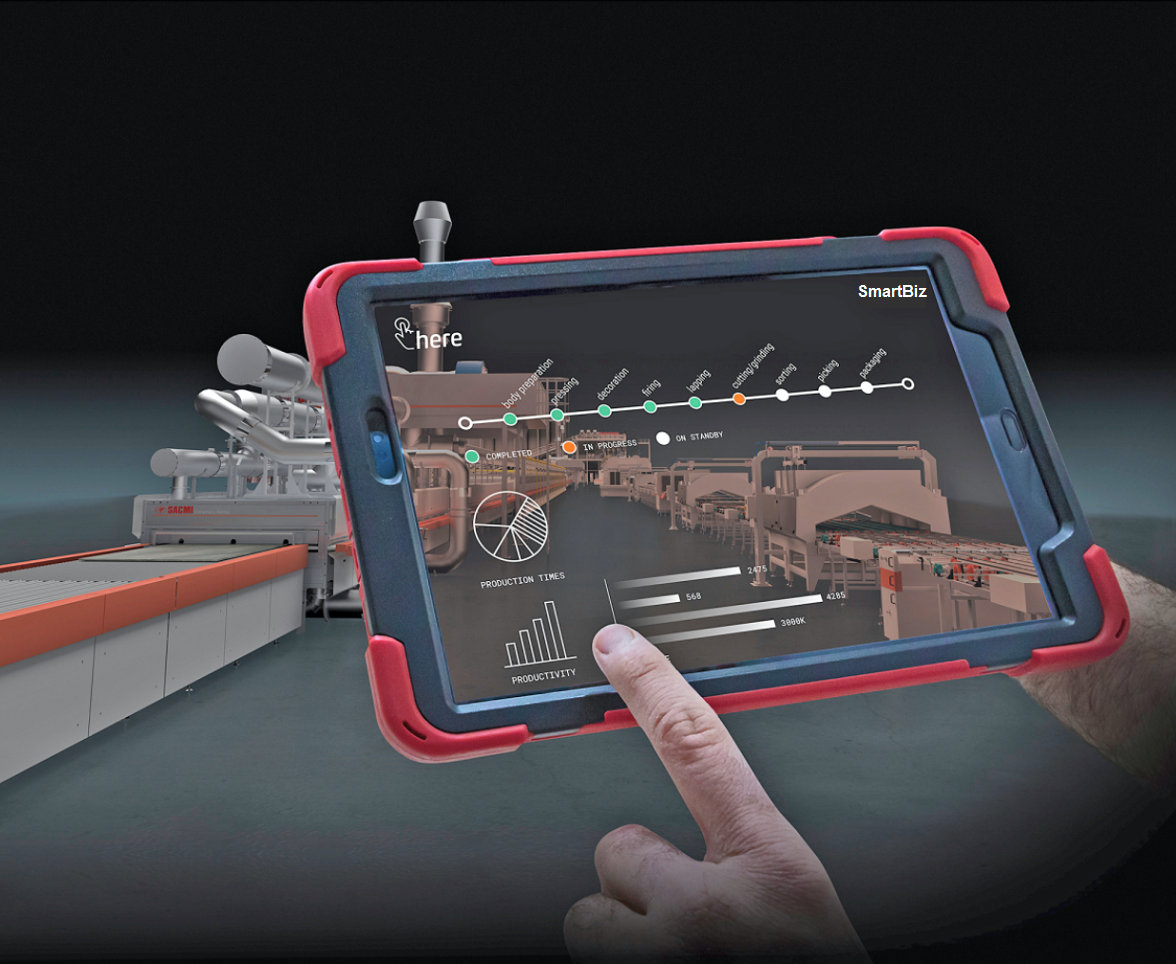
Using a smart production management system
These systems use a range of production data and other company data to analyze how its processes are performing. They use this data to assess how machines and people are performing and make adjustments as needed.
Learn more about smart manufacturing execution systems that help control the production of goods from raw materials to finished goods; digitize production processes; integrate with enterprise resource planning (ERP) systems to improve cost efficiency, quality and resource savings; and provide real-time operational visibility and product traceability based on IoT solutions.
Using Lean Manufacturing
Lean manufacturing is a methodology focused on minimizing waste in production systems while maximizing productivity. Waste is considered anything that customers don't believe adds value and aren't willing to pay for. The goal of Lean is zero wasted effort or inventory.
Learn now Lean manufacturing: how do you become lean?
 Production management
Benefits of production management
Effective production management is crucial in today's manufacturing environment. Without it, operations cannot meet their commitments or profit goals. But with sound production management, companies of any size can realize a number of benefits. These include: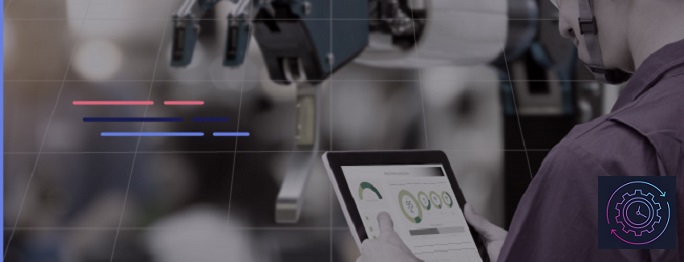
Production management benefits
Better quality
Products made on well-maintained equipment, with trained and measured labor, produce higher-quality finished goods. This requires balancing all these and other variables to help managers, supervisors, technicians and operators spot defects before they occur.
Lower operating costs
Regardless of the costing method, lowering costs is always top of mind for managers. Effective production management techniques and systems reduce these costs by providing mechanisms and methodologies to identify, analyze and change processes so as to arrive at the most cost-effective production method possible. By applying these techniques to all variables, costs are cumulatively reduced across the board.
Learn more Vinamilk's ERP system - a springboard for breakthrough
Learn more Vinamilk's ERP system - a springboard for breakthrough
Better decision-making
A sound production management system incorporates the use of data to help managers assess the plant's progress. This includes things like operator output, equipment performance and efficiency, quality monitoring methods and more. With these tools, managers can identify variances that may affect quality, production time and defects and address them proactively.
Lower waste levels
Waste is a hazard in any operation. But effective production management makes it possible to build and implement processes that reduce waste to the lowest possible level. Without it, quality rejects, scrap and over-processing increase production costs and reduce profit. But waste isn't just physical rejects. Waste can also include excess or unnecessary operator movement and repeated transport of WIP. Production management also relies on principles that reduce these kinds of waste.
Other frequently asked questions (FAQs)
Production management: overseeing and managing the production of products.
Operations management: the services provided to customers and the work that needs to be done to complete the production process.
Selecting products and designs.
Selecting the production process.
Choosing the right production capacity is a key step. Planning production.
Production control.
Quality and cost of goods.
Inventory control.
Machine maintenance and replacement services.
Conclusion
So you now have an overview and best practices for production management. To achieve the benefits you want, you need to plan production, decide how you will carry out the plan and the activities you will need to perform to complete production.
However, without the right tools or software, this task can be extremely difficult without automation, because so many things need to be monitored. That is why it's important to find a production management system that can centralize your entire business on one visual platform.